
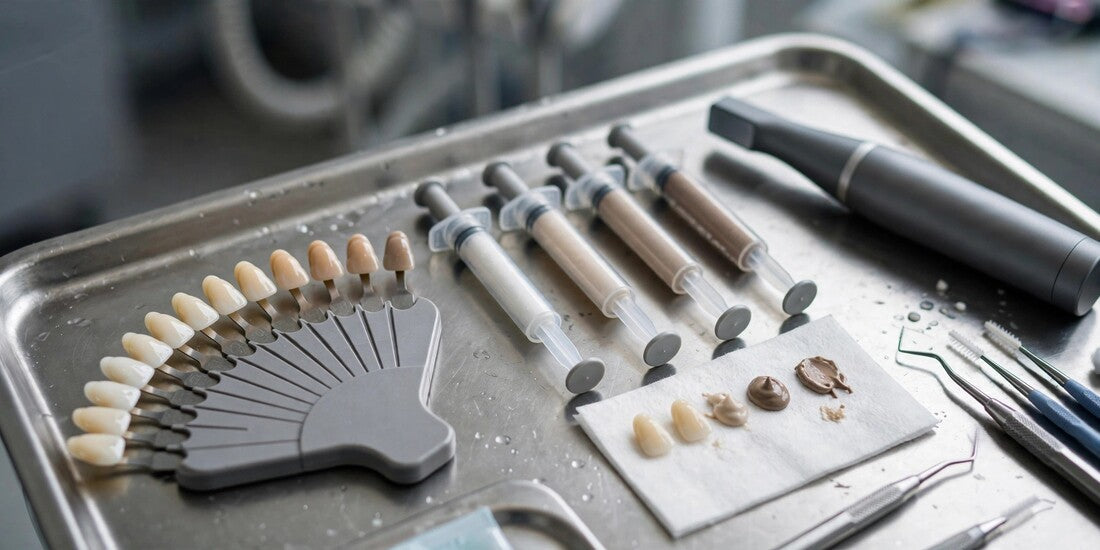
Restorative procedures, fillings, crowns, bonding, and core buildups make up most of the day-to-day revenue in a general practice. Running short on restorative dental supplies costs chair time immediately. Overbuying restorative products ties up cash in shade variants and materials that expire before they're used.
This guide covers what counts as a restorative supply, how the main material categories compare, and how to buy restorative products without overstocking the shelf. For a wider view of ordering across every department, see the practice's general dental buying guide.
What are restorative dental supplies?
Restorative dental supplies are the materials used to repair, rebuild, or replace tooth structure lost to decay, fracture, or wear. The category splits into two groups:
-
Direct materials are placed and shaped chairside in a single visit: composite resin, amalgam, glass ionomer, and the liners and bases placed underneath them.
-
Indirect materials are fabricated outside the mouth, either in a lab or on an in-office mill, and then cemented or bonded in place: crowns, inlays, onlays, and bridge units.
Material selection here isn't just a clinical decision. The wrong choice affects how long a restoration lasts, how much chair time a redo consumes, and how a practice's supply spend tracks against production. A composite that chips at the margin in eighteen months costs more in remake appointments than the few dollars saved buying the cheaper syringe.
Essential categories of chairside restorative materials
The five groups below cover the chairside clinical materials most general practices use every day. Audit your tray against this list before placing your next order.

Composite resins and aesthetic restoratives
Microhybrid and nanocomposite resins cover most anterior and posterior direct restorations, and bulk-fill composites have become standard for deeper posterior preps because they cure in a single increment instead of two or three layered ones. Shade matching accuracy and polish retention are the two properties that separate a composite system a practice keeps using from one that gets replaced after a year. For veneers, direct bonding, and other anterior work, stock from the cosmetic dentistry supplies collection alongside the core composite kit.
Dental cements, liners, and bases
This group covers two different jobs. Pulp protection materials, including calcium hydroxide and MTA, go directly over or near the pulp to manage deep preps. Luting cements, including resin cements, resin-modified glass ionomer, and zinc phosphate, hold indirect restorations in place. A base is used to replace missing dentin and provide bulk under a restoration. A liner is a thin coating placed mainly for its therapeutic effect on the pulp. Confusing the two leads to either under-protected pulp tissue or unnecessary bulk that compromises the final restoration's fit. Full ordering options are in the cements and liners collection.
Glass ionomer cements (GIC)
GIC is worth calling out on its own because it behaves differently from composite. It chemically bonds to tooth structure without a separate adhesive step, tolerates a damp field better than resin-based materials, and releases fluoride over time. That combination makes it a common choice for Class V lesions near the gumline and for pediatric restorations where isolation is harder to maintain. The tradeoff is lower wear resistance and less natural translucency than composite, so it's rarely the first choice for a visible anterior surface under heavy load.
Crown, bridge, and alloy materials
Amalgam is still ordered by some practices for posterior restorations where esthetics aren't a factor, and high-noble and noble alloys remain in use for crown and bridge work, particularly where a metal margin or metal-ceramic restoration is specified. Practices doing in-house crown prep should keep core alloy stock alongside preparation accessories. See the full range in the dental alloys collection.
Temporary restorative materials
Between the prep appointment and the final cementation, a temporary needs to seal the margin, hold occlusion, and come off cleanly without damaging the underlying tooth. IRM and other temporary filling compounds cover interim direct restorations, while provisional crown materials, whether self-cure acrylic or bis-acryl, protect crown and bridge preps. These are low-cost items, but running out mid-procedure is one of the more disruptive stockouts a front desk can face.
Material comparison and clinical outcomes
|
Metric |
Composite resin |
Glass ionomer cement |
Dental alloys |
|
Compressive strength |
Generally the highest of the three under normal chairside conditions |
Lower than composite or alloy. Adequate for low-stress areas |
Typically the highest, particularly for cast or milled restorations |
|
Aesthetics |
Strong shade match and polish, best for visible surfaces |
Limited translucency, less suited to anterior esthetic zones |
Poor for visible surfaces unless veneered with ceramic |
|
Fluoride release |
None |
Yes, ongoing low-level release |
None |
|
Primary clinical indication |
Anterior and posterior direct restorations, bonding |
Class V lesions, pediatric restorations, base material |
Posterior restorations, crown and bridge, high-load areas |
These figures describe general tendencies rather than fixed values. Actual compressive strength and wear performance vary by specific product and manufacturer, so check the instructions for use and technical data sheet for any material before making a clinical decision based on strength alone.
A few placement habits affect outcomes more than the material choice itself:
-
Etch and bond exactly according to the manufacturer's stated technique. Skipping steps to save chair time is the most common cause of microleakage in direct composite restorations.
-
Manage soft tissue before placement rather than during it. Clean margins depend on proper tissue displacement, which is where retraction materials earn their cost back in fewer redo appointments.
-
Finish and polish in the same visit rather than leaving a rough margin for the patient to notice later. A set of finishing and polishing tools dedicated to composite, separate from the burs used for prep, keeps the final surface consistent.
Inventory and purchasing guide: smart ordering for practices

How to stock a restorative kit without overbuying
Standardize on one or two core composite systems across the practice instead of keeping five brands to satisfy every associate's personal preference. Fewer systems means fewer shades and viscosities to track, less expired stock, and simpler reordering.
A PAR level system works well for restorative dental supplies specifically because usage is fairly predictable week to week. Set a minimum quantity for each item, the PAR level, and reorder whenever stock drops to that point rather than ordering on a fixed calendar schedule. This keeps commonly used shades and cement types available without carrying six months of a shade nobody uses.
What to check before you buy restorative materials online
Check these four things before you place an order, whether you shop restorative products online through a distributor site or order by phone:
-
Confirm the seller is an authorized distributor for the brand. Materials bought outside authorized channels can be near the end of shelf life, improperly stored in transit, or excluded from the manufacturer's warranty.
-
Check the expiration date on the specific lot before ordering, not just the product listing. Restorative materials, especially bonding agents and cements, have real shelf-life limits.
-
Ask how the product is stored and shipped. Some cements and bonding agents have temperature requirements, and a product shipped through a hot warehouse in summer may already be degraded on arrival.
-
Compare bulk pricing tiers against actual usage. A case-quantity discount only saves money if the practice will use the material before it expires.
When you buy restorative products online, check stock on dental equipment and instruments at the same time. Restorative procedures depend on functioning handpieces and curing lights as much as on the materials themselves.
Common inventory mistakes to avoid
-
Ordering extra shades or specialty materials for a single case instead of working from what's already on the shelf.
-
Skipping first-in, first-out rotation, which leaves older stock sitting behind newer boxes until it expires unused.
-
Buying gray-market materials at a steep discount without a manufacturer warranty, which removes recourse if a batch underperforms.
Frequently asked questions
What are the most essential dental restorative materials every practice should stock?
-
At minimum, a practice needs a core composite system in common shades, a bonding agent, a glass ionomer or resin-modified glass ionomer for base and liner use, a luting cement for indirect restorations, and a temporary filling material. Everything else can be added based on the specific procedures the practice performs regularly.
How do I choose between composite resin and glass ionomer cement (GIC)?
-
Choose composite for visible surfaces and areas under normal occlusal load, where its strength and shade match matter most. Choose GIC when moisture control is difficult, such as pediatric cases or subgingival Class V lesions, or when fluoride release is clinically useful. Many practices stock both and choose per case rather than standardizing on one for everything.
Why is it important to buy dental restorative materials from authorized distributors?
-
Authorized distributors guarantee the product has been stored and shipped within the manufacturer's specifications and that the item is covered under the manufacturer's warranty. Materials from unauthorized resellers may be past their effective shelf life or have been exposed to temperature conditions that affect performance, with no recourse if that happens.
How can dental practices avoid overstocking restorative inventory?
-
Set a PAR level for each item based on actual monthly usage, and reorder at that threshold instead of on a fixed schedule. Standardizing on one or two composite systems instead of several brands also reduces the number of shades and viscosities sitting on the shelf at any given time.
What factors should I evaluate before buying restorative supplies online?
-
Confirm the seller's authorization status with the manufacturer, check the actual lot expiration date rather than a general shelf-life estimate, ask about storage and shipping conditions for temperature-sensitive materials, and compare bulk pricing against realistic usage before committing to a larger quantity.
Where can I buy restorative products online?
-
Order through an authorized dental distributor rather than a general marketplace listing. An authorized seller guarantees manufacturer warranty coverage and proper cold-chain or temperature-controlled shipping where the product requires it. Alpine Dental Inc is one authorized source that carries composite, cement, and alloy lines from the brands covered in this guide.
Keeping restorative inventory in balance comes down to ordering the right materials in the right quantity, from a source that stands behind them. Alpine Dental Inc carries the composite, cement, alloy, and finishing lines covered in this guide for practices stocking or restocking a restorative tray.