
How to Buy Dental Supplies: A Complete Guide
Ordering dental supplies for a practice or lab is rarely as simple as picking the cheapest option in a catalog. Between material compatibility, sterilization requirements, and the sheer number of categories a clinic has to stock, procurement decisions add up fast. This guide walks through how to think about your supply chain, what to look for in a dental equipment supplier, and how to build a buying checklist you can actually use before your next order.
What Counts as "Dental Supplies"? (Restorative, Chairside, Endo & More)
"Dental supplies" is an umbrella term, and it helps to break it down into the categories that show up on most reorder lists.
Restorative materials cover the products used to rebuild tooth structure: alloys, cements and liners, and finishing and polishing supplies. If your practice does any direct or indirect restorations, this is likely your highest-volume category. You can browse the full range of restorative dental supplies to compare cement types and finishing kits side by side.
Chairside consumables are the day-to-day items every operatory burns through: anesthetics, burs and diamonds, impression materials, and preventive products. These are usually where bulk ordering pays off the most, since usage is predictable and stockouts are disruptive. A look at chairside dental supplies shows how much variation exists even within a single subcategory, such as impression materials.
Endodontic products include files, obturation materials, rubber dam supplies, and pins and posts. Endo cases tend to be time-sensitive, so having a dependable stock of endodontic supplies on hand matters more than it does for lower-urgency procedures.
Regenerative materials, such as membranes, synthetic grafts, and guided bone regeneration products, sit in a different cost and complexity tier. These are lower-volume, higher-value purchases, so it's worth reviewing regenerative dental materials carefully rather than defaulting to whatever brand a rep pushes hardest.
Implant products round out the surgical side: implant types, abutments, multi-unit systems, and CAD/CAM digital components. Because implant systems aren't universally interchangeable, checking compatibility before ordering from implantology products saves a lot of after-the-fact headaches.
How to Choose a Dental Equipment Supplier You Can Trust
Once you know what you need, the harder question is who you're buying it from. A reliable dental equipment supplier should make a few things obvious before you ever place an order.
Product breadth matters. A supplier that carries only a narrow range of restorative or chairside items forces you to juggle multiple vendors just to fill one order. Look for a catalog that spans consumables, equipment, and instruments, so you're not splitting shipments unnecessarily.
Policies should be clear, not buried. Return windows, minimum order quantities, and shipping thresholds should be stated plainly, not something you have to call and ask about. If a site is vague about how it handles backorders or damaged shipments, that's worth noting before you commit to a large order.
Support should be reachable. Procurement teams need a real point of contact when a compatibility question comes up, or a shipment arrives short. A supplier's customer service responsiveness is a genuine trust signal, not a nice-to-have.
Equipment needs its own scrutiny. Handpieces, dental X-ray units, and larger equipment purchases carry a different risk profile than consumables. Checking parts availability and warranty terms for dental equipment and instruments before buying helps protect you from downtime later if something needs servicing.
Dental Supplies Wholesale: When Bulk Buying Makes Sense
Buying dental supplies in wholesale isn't automatically the smarter move. It depends on what you're stocking and how predictable your usage is.
Bulk ordering tends to make sense for:
-
High-turnover consumables with long shelf life (gloves, masks, cotton products, basic impression materials)
-
Items your practice uses at a consistent, forecastable rate
-
Products where per-unit savings at higher order volumes are meaningful
Bulk ordering is a false economy when:
-
The product has a defined shelf life, and you can't realistically use it before expiration
-
Storage space is limited, and you'd be trading cash flow for shelf space
-
You're testing a new brand or material and haven't confirmed it fits your workflow yet
A practical middle ground many offices use is to separate their reorder list into two tiers: a wholesale tier for stable, high-use items, and a smaller, more flexible tier for specialty or lower-volume products, where trying before committing to volume makes more sense.
Difference Between Dental Equipment and Instruments

These two terms get used interchangeably in casual conversation, but they carry different purchasing considerations.
Dental equipment generally refers to larger, often stationary or semi-permanent assets: sterilization units, dental X-ray systems, chairs, and handpiece systems. Equipment purchases usually involve a longer evaluation cycle, warranty terms, parts availability, and sometimes installation or training.
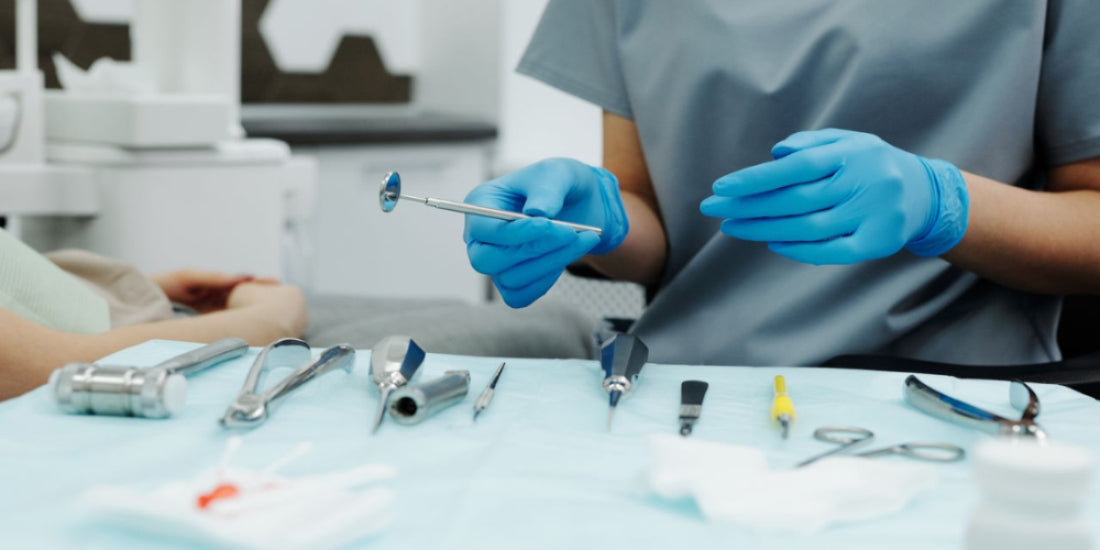
Dental Instruments are hand tools and smaller devices used directly in procedures, such as scalers, forceps, mirrors, explorers, and similar items. These typically have shorter purchase cycles, lower per-unit costs, and higher replacement frequencies due to wear or sterilization cycles.
Treating these as the same purchasing category leads to two common mistakes: under-budgeting for equipment maintenance and parts, or over-thinking what should be a routine instrument reorder. Separating them in your procurement planning keeps both budgets realistic.
Checklist When Buying Dental Products Online
Whether you're a solo practitioner or managing procurement for a multi-location clinic, a short checklist before every order helps catch problems early when buying dental products online:
-
Confirm compatibility, especially for implant systems, handpieces, and equipment parts. Verify the product matches your existing systems before ordering.
-
Check quantities per box or kit. Pricing comparisons only mean something if you're comparing equal unit counts.
-
Review shelf life and storage requirements. This matters most for regenerative materials, anesthetics, and any temperature-sensitive product.
-
Verify shipping timelines. Confirm current shipping thresholds and delivery windows at checkout rather than assuming a flat rate applies across every order size.
-
Understand the return policy before ordering anything expensive or specialty, particularly equipment.
-
Look for regulatory-cleared products where compliance matters, and don't assume that one country's clearance automatically applies across borders.
Frequently Asked Questions
How much should a dental office spend on supplies?
-
There's no single benchmark that fits every practice, since spend depends heavily on procedure mix, patient volume, and whether the office does its own lab work. Most practices find it more useful to track supply cost as a percentage of production rather than a fixed dollar figure, and to review that percentage quarterly against their own historical trend.
What dental supplies do dentists use most?
-
Chairside consumables tend to top the list: gloves, anesthetics, impression materials, burs and diamonds, and basic restorative materials like cements and liners. These items are practiced most frequently because they're used in nearly every patient visit, which is why keeping a stable supply of chairside dental supplies on hand is a common priority.
What factors should I consider before buying dental supplies for my practice?
-
Compatibility, shelf life, order quantity, and supplier reliability are the four factors that cause the most problems when overlooked. It's also worth confirming whether a product's regulatory clearance applies to your country, since US and Canadian standards aren't always interchangeable.
What are the best options for purchasing dental equipment for a clinic?
-
The right option depends on the type of equipment and your practice's service needs, but in general, it's worth prioritizing suppliers that are transparent about warranty terms and parts availability. Larger equipment purchases carry more long-term risk than consumables, so a supplier's post-sale support matters as much as the upfront price.
Where do dental offices typically purchase their supplies?
-
Most practices split their purchasing between a primary online supplier for routine reorders and one or two secondary sources for specialty items or backup stock. Buying online has become more common because it makes price and spec comparisons easier than working through a single sales rep.
How can I find reliable online stores to buy dental supplies?
-
Look for clear policies on shipping, returns, and order minimums, along with a catalog broad enough to cover multiple categories without forcing you to split orders across vendors. Responsive customer service and clearly listed product specs are also strong indicators of a trustworthy supplier.
Where can I order affordable dental consumables in the US?
-
Affordability is easiest to judge by comparing per-unit cost across equal quantities rather than sticker price alone, since box sizes vary widely between brands. Checking current pricing and shipping thresholds directly at checkout gives a more accurate picture than relying on advertised list prices.
Ready to Stock Up?
Whether you're restocking chairside consumables or evaluating a new equipment purchase, having a clear category structure and a short buying checklist makes procurement faster and less error-prone. Browse the full range of categories at Alpine Dental Inc to compare products across restorative, chairside, endodontic, and equipment lines in one place.